How to Fix Wrist Pain During Overhead Press—Plus 5 Shoulder-Building Alternatives

Share
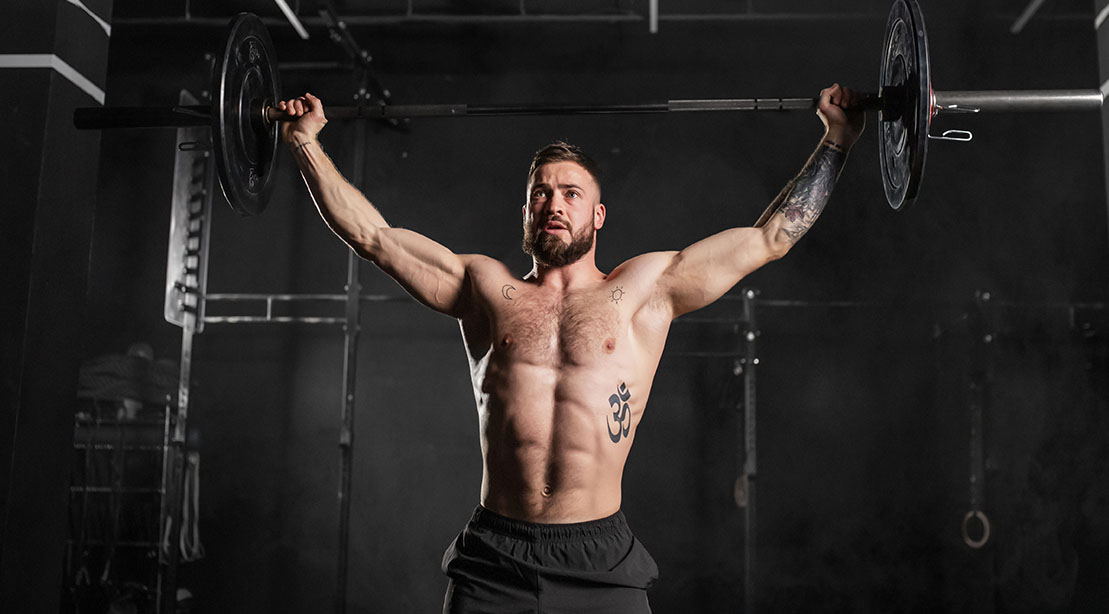
The barbell overhead press is a truth teller. There’s no bench, minimal assistance from the lower body if pressing strict, and nothing to lean on once the bar leaves the shoulders.
It’s you versus the barbell.
However, the barbell’s greatest strength (stability) can also be its greatest drawback: it locks both hands into a fixed position. That stability is great for strength and size, but it also limits your wrists’ freedom to move compared to other tools.
If the wrists get hyperextended, power and strength decrease, and the wrists become the weakest link.
That doesn’t mean a little wrist extension is bad, nor does wrist discomfort mean the barbell overhead press should be discarded. Sometimes tweaking the starting position is all that’s needed. At other times, an alternative is needed.
Here, I’ll look at why the barbell overhead press bothers the wrists, five fixes worth trying first, and five wrist-friendlier pressing variations that still build bigger, stronger shoulders.
Why Does the Barbell Overhead Press Hurt Your Wrists?
Your grip width, where the bar sits in your hand, and how well your forearms stack under the bar all influence the wrist position. The goal is to have the wrists over the elbows, the forearms vertical, and the bar resting in the heel of the palm.
The Bar Sits Too Far Back in Your Hand
If the bar rolls toward your fingers, the wrist has to extend farther backward to keep the bar from slipping. That makes it harder to stack the load over the forearm and turns your wrist into a weak link.
Your Wrists Aren’t Stacked Over Your Forearms
When the wrists are not in line with your forearms, you lose that strong vertical stack. That doesn’t mean the wrists have to be stacked at all times. A slight wrist break is acceptable in the rack position, but if the wrists hurt, not locking in the stacked position could be the reason.
Grip Width Doesn’t Suit You
Grip width influences everything above the hands. Go too wide, and the elbows can flare. Go too narrow, and the bar may drift forward. Either way, the wrists may compensate for a grip width that’s not meant for you.
Maybe the Barbell Isn’t For You
A straight bar fixes both hands and the pressing path. That stability is one reason the barbell overhead press is awesome, but it also means your wrists get limited freedom. That’s also why dumbbell pressing is more forgiving. They give the hands, wrists, elbows, and shoulders more freedom to find a pressing groove.
If the barbell overhead press bothers your wrists, here are form fixes to improve your pressing position.
5 Form Fixes to Eliminate Wrist Pain on Overhead Press
Before switching out, run through these five fixes.
Note: Weak wrist flexors can contribute to excessive wrist extension, but grip position and barbell placement in the hands are the bigger culprits.
Get the Bar Deeper Into Your Palm
When the bar sits too high toward your fingers, it encourages wrist extension and puts the load behind your forearm. Instead, place the bar over the heel of your palm so the weight sits closer to the forearm bones.
Stack Your Wrists Over Your Elbows
From the front, your forearms should be vertical beneath the bar, with your wrists stacked over your elbows. If the forearms angle too much in or out, your grip width needs adjusting.
Adjust Grip Width
“Just outside shoulder width” is a good starting point, not a commandment etched in stone. If your grip is too wide, your elbows can flare. If it’s too narrow, the bar can drift forward. Either can interfere with the stacked position you’re trying to create.
Point The Knuckles Toward the Ceiling
Here’s a cue that cleans up many wrist-positioning issues: knuckles to the ceiling. Once the bar is sitting on the heel of your palm, squeeze it and keep the middle knuckles pointing up toward the ceiling. This encourages a stronger wrist position and helps prevent the bar from rolling backward toward your fingers.
Reduce the Load and Rebuild Your Press
When the weight is submaximal, form issues are hidden. Add enough plates, and those issues will reveal themselves. If the wrists hyperextend as the load increases, take some weight off and rebuild the movement with better positioning. Then gradually add weight while maintaining positioning.
If that doesn’t work, you don’t need to stop overhead pressing. You may need an alternative.
Halfpoint/Adobe Stock
What To Look For in an Overhead Press Alternative
If the barbell overhead press and your wrists refuse to play nice, a worthwhile alternative should check these boxes.
Strong Shoulder Emphasis
The barbell overhead press primarily targets the anterior and medial delts while also engaging the triceps, upper traps, and core. A good alternative should keep the delts front and center to maintain a similar training effect.
Natural Wrist Position
Unlike a straight bar, dumbbells, kettlebells, cables, landmine, and some machines allow your hands to move independently. A neutral or semi-neutral grip can give the wrist more freedom while keeping the load stacked over the forearm.
Similar Pressing Path
A lateral raise targets the delts, but it’s not a replacement for the overhead press. An alternative must preserve the overhead or upward-pressing path while building shoulder and triceps strength. Similar enough to provide carryover, different enough to solve the wrist problem.
Now let’s get to the five exercises that do exactly that.
OneLoveOnePhoto/Adobe Stock
5 Wrist-Friendly Alternatives to the Barbell Overhead Press
The barbell isn’t the only tool for building bolder shoulders. These five will do the trick also.
Neutral-Grip Dumbbell Overhead Press
This is the closest variation to the barbell overhead press, and each hand gets to do its own thing. Holding the dumbbells with your palms facing each other gives you a neutral grip and allows your wrists, elbows, and shoulders to find a pain-free path for pressing.
Why it works:
Allows each wrist more freedom
Maintains a true overhead pressing path
Easier to maintain the stacked position
Form Tip: Keep the dumbbells stacked over your wrists and your elbows slightly in front of your shoulders.
Sets & Reps: 3–4 sets of 6–12 reps.
Half-Kneeling Landmine Press
The half-kneeling landmine press trains the path between vertical and horizontal pressing, with the wrist in a more neutral position than in the barbell variation. The half-kneeling stance also sneaks some anti-rotation and core stability into the equation.
Why it works:
Provides a more neutral wrist position
Still provides a strong shoulder and triceps stimulus
Adds unilateral and anti-rotation core work
Form Tip: Keep your ribs down and squeeze the glute on the kneeling side.
Sets & Reps: 3-4 sets of 8–15 reps per side.
Bottoms-Up Kettlebell Press
The bottoms-up kettlebell press is about making the wrist earn its position. The bottoms-up KB creates instability, forcing you to grip hard and keep your wrist stacked underneath the load. If the wrist collapses or the bell drifts out of position, you’ll receive immediate, painful feedback.
Why it works:
Reinforces a stacked wrist and forearm
Builds grip and shoulder stability
Exposes form issues
Form Tip: Crush the kettlebell horn, keeping your knuckles pointing toward the ceiling.
Sets & Reps: 2–3 sets of 6–12 reps per side.
High-Incline Dumbbell Chest Press
Set an adjustable bench to a high incline—around 60 to 75 degrees—and the dumbbell chest press becomes more shoulder-dominant than the standard incline bench press. Use a neutral or semi-neutral grip, depending on feel. The pressing path is similar to that of the half-kneeling landmine press.
Why it works:
Easier to maintain neutral wrists
High incline shifts more emphasis toward the shoulders while training chest
The bench provides increased stability
Form Tip: Don’t turn it into a standard incline chest press by dropping the bench angle or excessively flaring your elbows.
Sets & Reps: 3–4 sets of 8–15 reps.
Machine Shoulder Press With Neutral-Grip
Sometimes total stability is the way to go. The combination of a neutral grip, sitting down, and a fixed pressing path allows you to concentrate on pushing hard and bringing your delts and triceps closer to muscular failure.
Why it works:
Neutral handles ease wrist discomfort
Increased stability and a fixed pressing path
Allows you to train close to muscular failure without wrist position becoming the limiting factor
Form Tip: Adjust the seat so the handles start at shoulder height rather than forcing you into an awkward bottom position.
Sets & Reps: 3–4 sets of 8–15 reps.
The Final Press
The barbell overhead press is one of the best exercises for building bigger, stronger shoulders. But none of that matters if your wrists hurt.
If the form fixes don’t take, it’s time to change the tool, not the goal. The five alternatives will still build bolder shoulders without the barbell. These aren’t permanent replacements. They’re solutions.
Use them while you’re strengthening your wrists, rotate them through different training phases, or keep them if they let you train harder without wrist discomfort.
There can be gain without pain.