How Your Grip Technique Changes Everything: Hand Placement for Max Strength & Muscle

Share
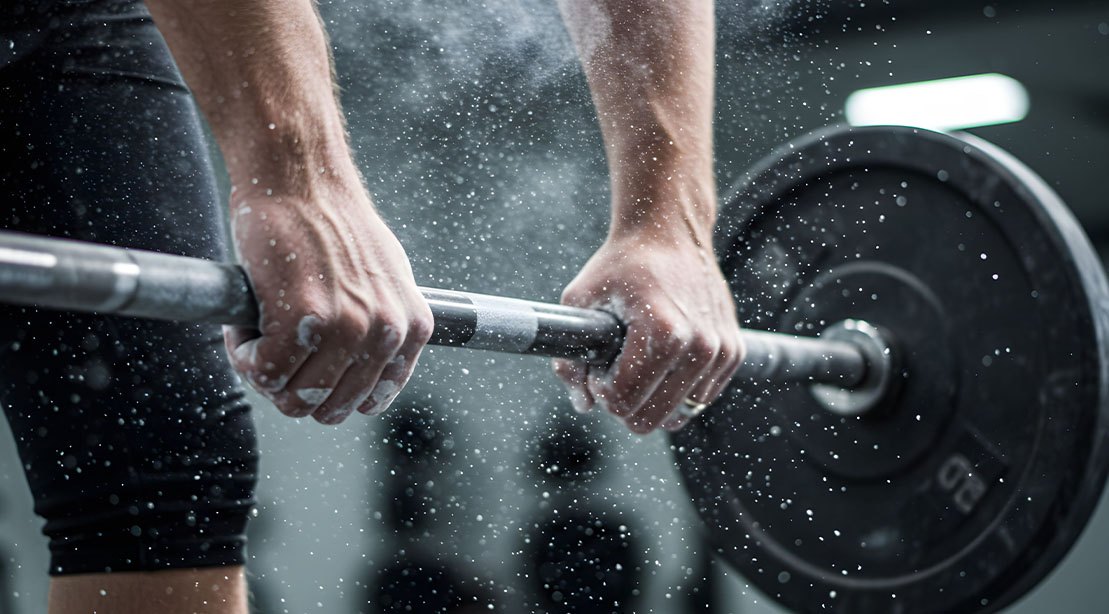
Gripping sets the stage for what comes next, yet many lifters treat it as an afterthought. Grip it and rip it, let’s go.
But how you grip matters more than you realize.
Grip width, wrist position, and where the bar sits in your palm all affect strength, stability, comfort, range of motion, and how effectively you transfer force. When it feels right, you’re locked in; when it doesn’t, your joints may tap out before the working muscles even raise a sweat.
Your anatomy, mobility, injury history, and training goals all influence grip. Sometimes a grip change can make you stronger; other times, it may reduce discomfort or reveal a weakness that needs work.
Here, I’ll cover where the bar should sit in your hands for certain lifts, the main grip styles, how it affects muscle recruitment, and a checklist to determine which grip suits you best.
Your Grip Sets up What Comes Next
Your grip does much more than prevent the weights from slamming to the floor. It also determines joint alignment and form.
Start with wrist and forearm alignment. When the bar sits in a strong position in your hand, your wrist and forearm can transfer force more efficiently. When it doesn’t, the wrist may hyperextend and become the weak link. During the back squat, for example, using a false grip keeps the wrists more in line with the forearm and helps keep the load on the back, not the wrists.
Grip width matters, too. Moving your hands wider or narrower on a barbell changes elbow and shoulder position, which can alter comfort, stability, and range of motion.
Then there is grip strength. On deadlifts, rows, pull-ups, and loaded carries, your hands may give out before the working muscles do. Sometimes that means your grip needs work. Other times, it means choosing a different grip so your grip isn’t the weak link.
Before worrying about the lifting part, ensure you’re holding the weight in a way that gives you the best combination of strength, control, and comfort.
What Are the 6 Main Grip Styles in Strength Training?
Multiple grips exist, and each one changes how your hands, wrists, elbows, and shoulders align. The key is knowing what each grip does and when to use it.
Pronated Grip
A pronated grip is when your palms face away from you or toward the floor, depending on the exercise. Think of deadlifts, rows, pull-ups, and overhead presses.
Advantage: It’s symmetrical and easy to use, making it the default grip for many strength exercises.
Drawback: Your hands may become the limiting factor on heavy pulls because it’s not your strongest grip.
Best for: Lifters who want to build grip strength or don’t need extra assistance.
Supinated Grip
With a supinated grip, your palms face toward you or upward. You’ll see it most often with chin-ups, curls, and some row variations.
Advantage: Supination puts the biceps in a stronger position to contribute.
Drawback: Some lifters feel discomfort in the wrists or elbows, particularly with a barbell.
Best for: Lifters who want more biceps action or who feel strong in a palms-up position.
Neutral Grip
A neutral grip is when your palms face each other. Common examples include hammer curls, neutral-grip pull-ups, dumbbell presses, and cable rows.
Advantage: Neutral grips often feel natural because the wrists and forearms remain in a more neutral position. Compared to the grips above, it’s a stronger grip.
Drawback: Not every piece of equipment gives you this option.
Best for: Lifters who experience discomfort with pronated or supinated grips, or who feel stronger with a neutral grip.
Mixed Grip
The mixed grip uses one pronated hand and one supinated hand. It’s often used during heavy deadlifts.
Advantage: It helps keep the bar from rolling out of your hands, which usually lets you hold more weight than a double-overhand grip.
Drawback: It creates an asymmetrical position, and each arm has different demands.
Best for: Lifters whose grip strength is limiting heavy deadlifts.
Hook Grip
With a hook grip, your thumb wraps around the bar first, and your fingers clamp over the thumb.
Advantage: It creates a very secure grip and is often used in Olympic lifting and heavy deadlifting.
Drawback: It can be downright uncomfortable until your thumbs get used to it.
Best for: Lifters who want an alternative to mixed grip.
False Grip
A false grip doesn’t use the thumbs because it places them on the same side of the bar as the fingers.
Advantage: On the back squat, it can help lifters keep the wrist and forearm in better alignment.
Drawback: You lose some bar security, which makes it a poor choice for pressing exercises.
Best for: Lifters who benefit from a straighter wrist position and can safely maintain control of the bar.
Where the bar sits in your hand can make the difference between forming a solid connection with the weight or having your wrists be the weak link.
For pressing exercises, aim to keep your forearm as vertical as possible under the bar. On the bench and overhead press, that means placing the bar toward the heel of the palm. This reduces unnecessary wrist extension and gives you a stronger line of force into the bar. A false grip (no thumbs) isn’t recommended here, as it increases injury risk and reduces muscle activation further up the chain.
Pulling exercises are a different story. During deadlifts, burying the bar too deep in the palm can cause it to roll toward the fingers. That rolling action can bunch and pinch the skin, which is one reason calluses form and become painful. Holding the bar between the distal transverse crease and the proximal digital crease (finger crease zone) reduces this issue.
Takeaway: pressing grips focus on stacking and force transfer, while heavy pulling grips focus more on security, friction, and keeping the bar from tearing up your hands.
How Grip Width & Placement Alter Muscle Recruitment
Your grip affects elbow path, shoulder rotation, barbell security, and which parts of the body do more work. That effect is more noticeable during rows, curls, pull-ups, and deadlifts.
Rows
Rows give you plenty of grip options because you can use a barbell, dumbbells, cables, or machines, and each setup changes what your elbows and shoulders can do.
Pronated grip during a barbell row often encourages more elbow flare. As the elbows move farther from the torso, the upper back muscles, including the traps, rhomboids, and rear delts, get more involved.
Supinated grip often keeps the elbows closer to the body and increases biceps engagement. That tucked-elbow position can also create a stronger lat bias because the shoulder moves through more extension.
Neutral grip allows the shoulders to sit in a more natural position, and you can adjust the elbow path depending on what you want to emphasize.
Curls
Grip position has an even more obvious effect with curls because the biceps do more than bend the elbow. They also supinate the forearm.
Supinated grip places the biceps in its strongest position to contribute to elbow flexion.
Neutral grip reduces the biceps’ supination advantage and increases the contributions of the brachialis and brachioradialis.
Pronated grip further reduces the biceps’ mechanical advantage and places more demand on the brachioradialis and forearm extensors.
Pull-Ups and Chin-Ups
The same principle applies when your body moves instead of the weight.
Pronated pull-up grip generally reduces the biceps’ mechanical advantage compared with a chin-up. The lats and upper back are the prime movers, but with less biceps help.
Supinated chin-up grip places the biceps in a stronger position, which is one reason many lifters find chin-ups easier than pull-ups.
Neutral grip splits the difference. You still get plenty of biceps action, but the neutral shoulder and wrist position feels better for some lifters.
Deadlifts
Deadlifts are more about how securely you can hold the bar and how that grip affects the pull.
The double-overhand grip is the most symmetrical option. Both shoulders and arms remain in the same position, and it places a high demand on grip strength. The downside is simple: your hands may give out before the muscles you’re targeting do.
A mixed grip helps stop the bar from rolling because each hand resists rotation in the opposite direction. That often makes it easier to hold heavier loads, but the shoulders are no longer symmetrical.
The hook grip keeps both hands pronated while trapping the thumb under the fingers. It gives you the symmetry of double-overhand with much more holding security. The tradeoff? Your thumbs may hate you for a while.
Takeaway: changing the grip changes joint position, and joint position determines which muscles have the best leverage.
How to Tell If You Got Your Grip Right
The “best” grip is usually the one that gives you the strongest, most stable position without making your wrists, elbows, or shoulders hate you.
Here’s how to figure that out.
Does the Grip Cause Pain?
Discomfort is feedback. That doesn’t mean you can fix every ache by moving your hands an inch or two, but grip position is one variable you shouldn’t ignore.
Are You Stronger With It?
Some grip positions give you better leverage. For example, you may deadlift more with a mixed or hook grip than with a double-overhand grip. Strength isn’t the only factor, but if one grip consistently lets you produce more force while maintaining good technique and comfort, that matters.
Does It Expose a Weak Point?
If your double-overhand deadlift grip gives out early, that tells you something about your grip strength. If reverse curls humble you compared with regular curls, your brachioradialis and forearms may need more work.
Does It Put You in a Better Position?
The best grip should help the rest of your body do its job.
Ask yourself:
Can you keep your wrist in a neutral position?
Can you control the weight throughout the rep?
Does your elbow path match the exercise’s requirements?
Can you maintain the intended range of motion?
If changing your grip improves several of those things at once, you’re probably moving in the right direction.
Does It Fit Your Anatomy?
Not everyone is built the same, so treat “grip exactly here” recommendations as starting points, not commandments. Start with a proven position, pay attention to how it feels and performs, and make small adjustments from there.
Grip Decision Checklist
You now know how your grip changes things. Bring that awareness to every lift to see whether your grip helps or hinders the lift.
Does it feel comfortable? Some effort is expected, but your wrists, elbows, and shoulders shouldn’t hurt from the start.
Can you maintain a strong wrist position? The wrist shouldn’t be the weak link.
Does it let you use the range of motion you want? A grip that shortens the range isn’t helping.
Is the load stable? Strength without control is useless.
Does it make you stronger? If one grip consistently improves your leverage and stability, use it.
Does it expose a weakness? Sometimes it shows you what needs more work.
The Final Word
Our hands are often the first contact with the weight, and how you set your grip affects everything downstream. That’s why you pay attention to the grip before the rip.
But grip is fluid. Sometimes it’s textbook, but your joints or performance have different ideas. Sometimes a small adjustment in width or hand position will make all the difference.
The key takeaway: your grip should serve you and the lift, not fight it.